Thai flower etiquette: what flowers mean and what to avoid
Jasmine for mothers, lotus for the Buddha, marigold for good news. A short field guide to the meanings behind flowers in Thailand, and the few that can send the wrong message.
Updated November 2, 2026
Flowers carry vocabulary in Thailand
In many Western countries a bouquet is a mood. In Thailand it can also be a sentence. Some flowers belong to a person (jasmine and mothers), some to a place (lotus and temples), and a few to an occasion you would rather not accidentally invoke. None of this is a strict code of law. It is closer to a shared habit, and knowing the habit helps you choose well from far away.
Thai flower language owes a lot to Buddhism, and temple offerings are an everyday sight. The act of offering is called bucha, showing respect with a material gift, and one writer on the subject stresses that the offering is the good intention behind it, not the object. Keep that in mind for the rest of this page: it explains why sincerity forgives many small mistakes.
The flowers you will meet most often
Jasmine
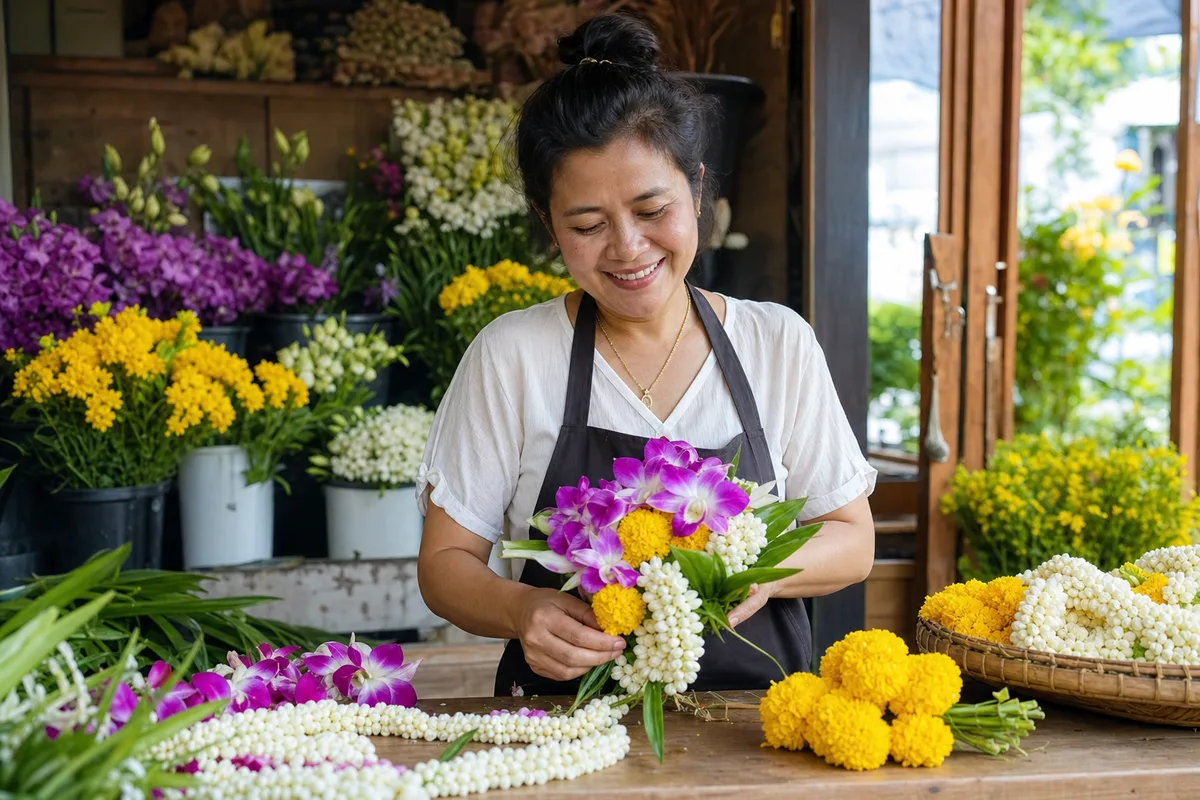
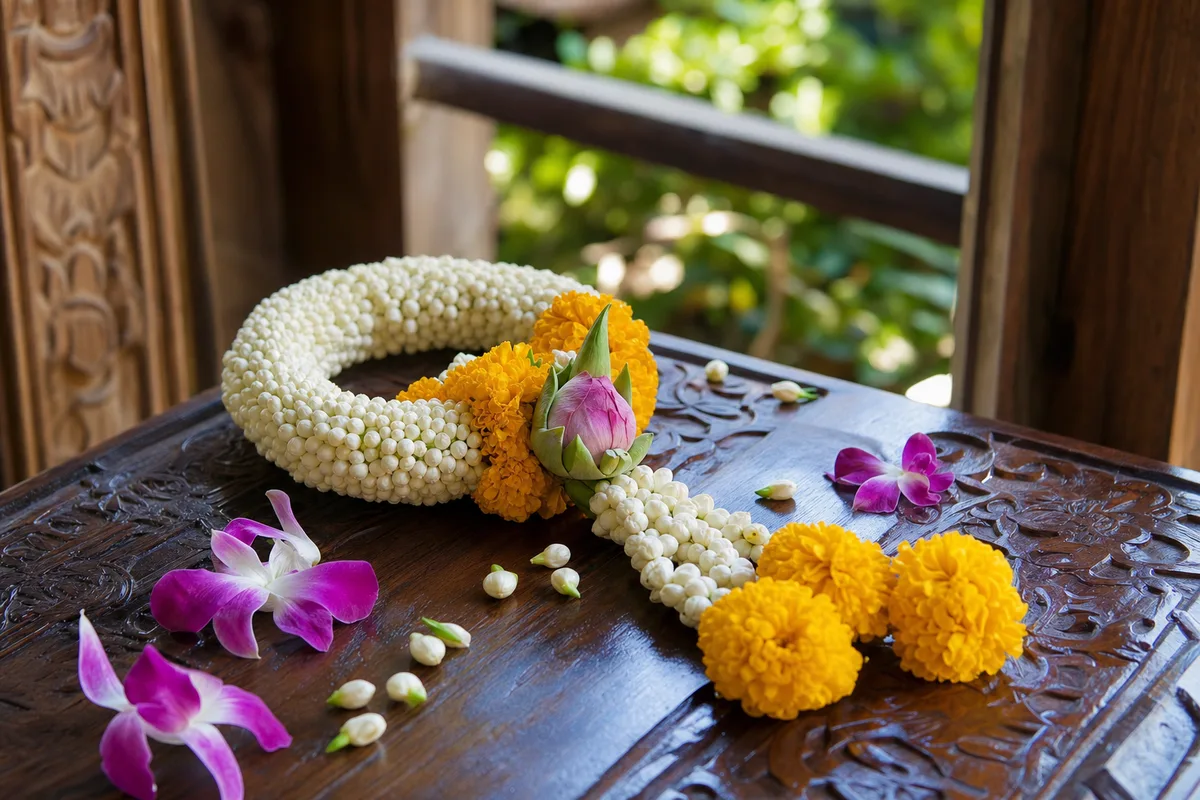
Jasmine is ดอกมะลิ (dok mali). It was officially named the flower of National Mother's Day in 1976, and Mother's Day falls on 12 August. A Thai news outlet describes the white colour as a mother's heart free of selfish desire and the scent as lasting care. Garlands of jasmine are also offered to monks, teachers and elders, so the flower is not only for mothers. See the Mother's Day guide for gifts built on that idea.
Marigold
Marigold is ดาวเรือง (dao rueng), which one guide translates as glowing like a star. It suits most congratulatory occasions, and temple altars use it for its colour. If you want a Thai-leaning flower for a graduate, a new job or a business opening, marigold fits. The graduation guide goes into that.
Lotus
Lotus is the flower most tied to offering. It grows from mud and opens above the water, which is why it stands for purity and for rising above hardship. Because it belongs to the Buddha and shrines, it is a poor choice for a birthday vase. Garlands for Buddha images often use it.
Orchid
Orchids stand for friendship and support in one guide, and for beauty and calm in a Buddhist reading. They also last a long time, which is useful when you cannot be sure the recipient is home on the day of delivery.
Others worth knowing
- Gardenia, พุด (phut), sounds like the word for Buddha and is described as a blessed beginning. It is suggested for congratulating parents on a new baby.
- Sunflower, ทานตะวัน (than tawan), is described as strength and moving in the right direction.
- Chrysanthemum arrived through Chinese tradition and stands for long life.
The flowers to be careful with
The clearest warning in the sources is tuberose. One guide says it is the flower Thais usually place near the coffin at funerals and says it should never go to a hospital patient. Another source lists tuberose, rakam, hibiscus and leelawadee (frangipani) as flowers some people avoid in garlands, linked with funerals, hardship or sorrow. It is careful to say this is popular belief and not a religious rule.
The leelawadee case is interesting. Frangipani is common in Thai gardens and hotels today. Its older Thai name, lan thom, was treated as a sad word, and the tree was long associated with cremation grounds and cemeteries. The new name leelawadee was introduced to give the flower a lighter image. Many people now grow it happily, while some older people may still hesitate, which is why a florist cannot call it either always safe or always unlucky.
Roses are not on the warning lists above, with one note from the garland world: if you offer roses to a Buddha image, remove the thorns first, because thorns symbolise obstruction. For a living bouquet you do not need to do this, but a thornless stem is considerate.
What about colours?
Sources agree on far fewer colour rules than on flower rules. White is the colour of purity for jasmine and lotus and of mourning at funerals, so context decides. Bright, cheerful colours suit congratulations, and the marigold's gold is welcome in celebration. For a funeral the guidance leans plain and white, which is covered in the funeral flowers guide. Where a source did not give a firm colour rule, this page does not invent one.
How to choose when you cannot ask
- Name the occasion first: birthday, congratulation, thanks, get well, condolence.
- Pick a flower with a friendly meaning, such as orchid, marigold, gerbera or sunflower.
- Skip tuberose unless you are certain the occasion is a funeral and a local has advised it.
- Keep lotus for the temple, not the living room.
- Add a short card in English and, if you can, a few checked words of Thai. The card guide has examples.
Last, remember how far a kind gesture travels. Thai recipients will almost always read the intention first. A well-chosen orchid with a warm card does more than a perfect flower with a cold one. If you are ready to place an order, the page on sending flowers from abroad tells you what to prepare.
Common questions
Is it rude to give someone white flowers in Thailand?
Not by default. Jasmine is white and is the flower of Mother's Day, and white is the colour of purity in many Thai contexts. White also appears at funerals, so the occasion and the flower type matter more than the colour alone. If the gift is for a sick person or a mourner, ask someone local.
Can I send lotus flowers as a gift?
Lotus is mostly for the Buddha and shrines. One writer on Thai flower language notes it is not seen as a romantic flower even though the pink bloom looks like one. A bouquet of lotus for a friend would probably puzzle the recipient. Choose something else for a living room.
What flowers should I avoid giving?
Tuberose is the one most often named, because it is linked with funerals. Some sources also list rakam, hibiscus and leelawadee (frangipani) as flowers avoided in garlands because of popular belief, though they say it is not a religious rule. When unsure, pick orchids, gerbera or marigold, and read the ordering guide.
What do orchids mean in Thailand?
One guide to Thai flower language says orchids stand for friendship and support. Another describes them as flowers of beauty and tranquility in Buddhism. Both readings are friendly, which makes orchids a safe gift for many occasions.
Ready to send?
A local florist arranges the bouquet and delivers it to the address you give.
See bouquets